
Claudia Laurent
Golf writer, Golf Handicapp · 21 July 2026
The short answer
A 5 handicap loses under one ball a round, a 15 handicap almost three, and a 25 handicap close to six. Each lost ball usually costs a penalty stroke too, so it adds up fast, and keeping the ball in play is one of the cheapest ways to shave shots.
Nobody enjoys reaching into the bag for a fresh ball, but few golfers realise how much it is quietly costing them. A lost ball is rarely just a ball, it is usually a penalty stroke as well. Here is how many balls golfers really lose per round by handicap, why the gap between a low and a high handicapper is so wide, and what it means for your scorecard.
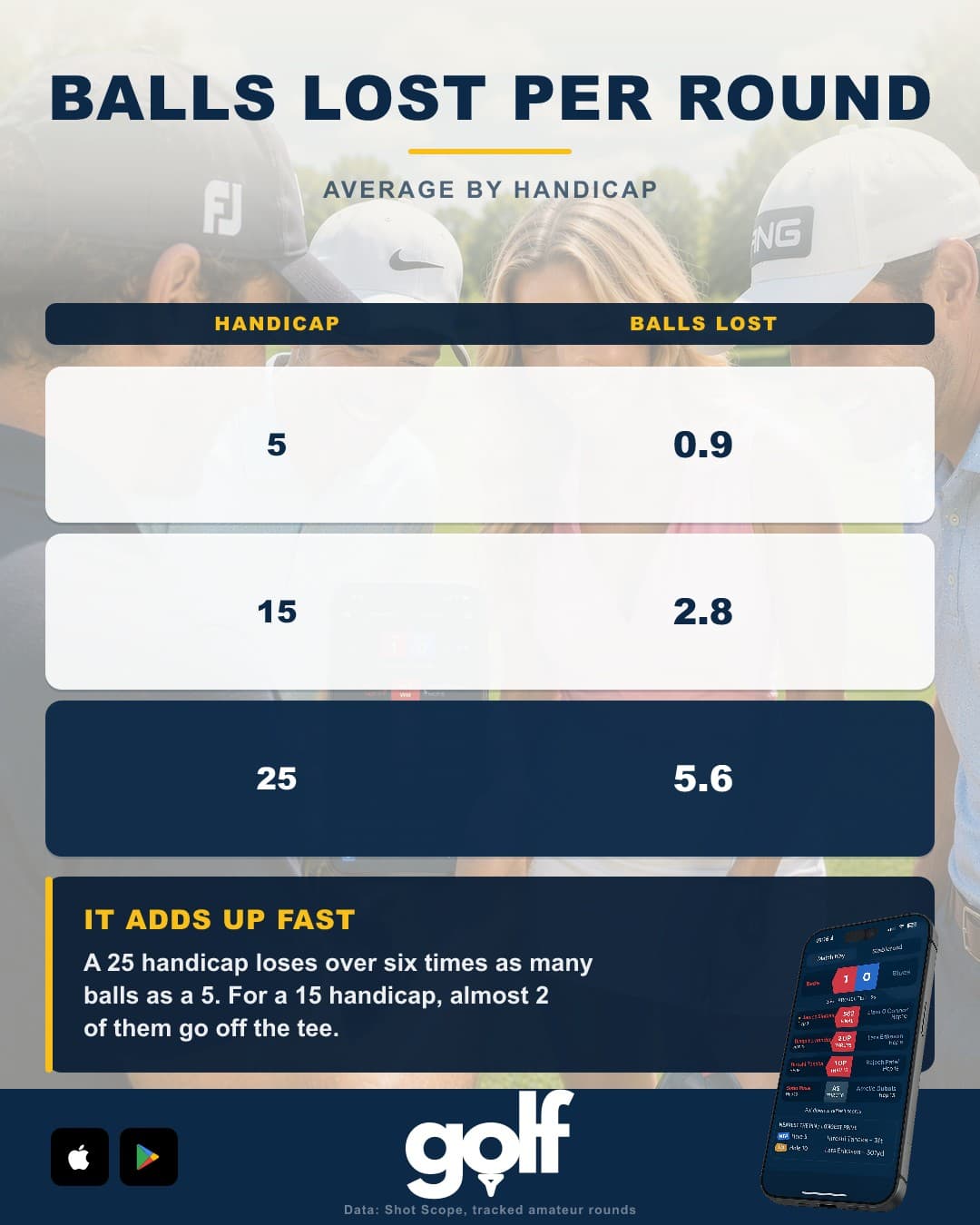
Balls lost per round, by handicap
Read it as the average number of balls lost in an 18-hole round. The climb from a 5 to a 25 handicap is dramatic, and almost all of it is wayward shots finding trouble.
| Handicap | Balls lost per round |
|---|---|
| 5 handicap | 0.9 |
| 15 handicap | 2.8 |
| 25 handicap | 5.6 |
Why the gap is so wide
A 25 handicap loses over six times as many balls as a 5. Higher handicappers hit more offline shots and those shots are wilder, so a bigger share end up in water, out of bounds or lost in the rough. For a 15 handicap, almost two of those lost balls a round go astray straight off the tee, which is exactly where the damage tends to start.
It costs more than the ball
The sleeve of balls is the cheap part. Each lost ball is usually a stroke-and-distance penalty, so it is a shot gone as well. A mid handicapper losing nearly three balls a round is often handing back three or more shots before the short game even comes into it. Keeping the ball in play is one of the highest-value skills in golf, and it does not require a swing change.
See where your shots go
Log every round with Golf Handicapp and track the damage. Logging rounds and your handicap are free, always.
How to lose fewer
Course management does more here than any lesson. Club down off the tee on tight holes, aim at the widest part of the fairway, and play away from the big miss rather than chasing every yard. Trading a little distance for a lot more fairways is one of the quickest ways to lower your scores, and it pairs neatly with cleaning up where golfers actually lose their shots.
Know your own number
These are averages across thousands of rounds, and yours is your own. Log your golf and you can see how many balls and penalty strokes you really give away, then keep an eye on your handicap with our WHS handicap calculator. Every round you post in a Golf Handicapp tournament counts toward your handicap too.
Common questions
How many golf balls does the average golfer lose per round?+
It depends heavily on ability. Tracked data has a 5 handicap losing about 0.9 balls a round, a 15 handicap around 2.8, and a 25 handicap about 5.6. So a mid handicapper loses roughly three balls a round and a higher handicapper closer to six.
Why do higher handicaps lose so many more balls?+
Two reasons. They hit more wayward shots, and those shots are wilder, so more of them find water, out of bounds or thick rough. A 25 handicap loses over six times as many balls as a 5, and each lost ball usually costs a penalty stroke as well as the ball itself.
How much does a lost ball cost you on the scorecard?+
Usually a stroke, sometimes two. A lost ball or one out of bounds is stroke and distance, so you replay the shot with a penalty. For a 15 handicap losing nearly three balls a round, that is often three or more shots gone before you have even chipped or putted.
How do I stop losing so many golf balls?+
Club down off the tee on tight holes, aim at the widest part of the fairway, and take the big miss out of play rather than chasing distance. Course management saves more balls than swing changes, and keeping the ball in play is one of the quickest ways to lower your scores.
Keep reading

About the author
Claudia Laurent · Golf writer, Golf Handicapp
Claudia writes about the World Handicap System, golf scoring and getting more from every round for Golf Handicapp. She is a mid-handicap golfer who logs every card, the good ones and the ones she would rather forget.
Last updated 21 July 2026.